
Three Dress References, Three Fabric Decisions: A Factory Development Comparison
Start with the garment, not a fibre name
A reference photograph is a useful starting point for custom dress development, but it cannot prove fibre composition, fabric weight or tested performance. At ZGYESE, the factory brand of Dongguan Night Clothing Co., Ltd. in Humen, Dongguan, we use the visible silhouette and construction details to discuss a proposed production material plan. Buyers should compare that plan with their target appearance, budget and market before treating it as an order specification. This distinction makes a quotation more useful: both sides can see what the estimate assumes and what still needs sample confirmation.
Translate the silhouette into material requirements
First identify the main garment, its length, volume, fit and visible construction. A gathered skirt needs enough usable fabric width and appropriate body at the waist seam. A close-fitting dress may depend on stretch direction and recovery. A transparent sleeve raises a different question from a lined bodice: where should the fabric remain sheer, and where must it provide coverage? These are design requirements rather than measured facts. Ask the factory to explain the relationship between each important detail and the proposed material, instead of accepting a generic description such as premium fabric.
Example: a crinkle maxi shirt dress
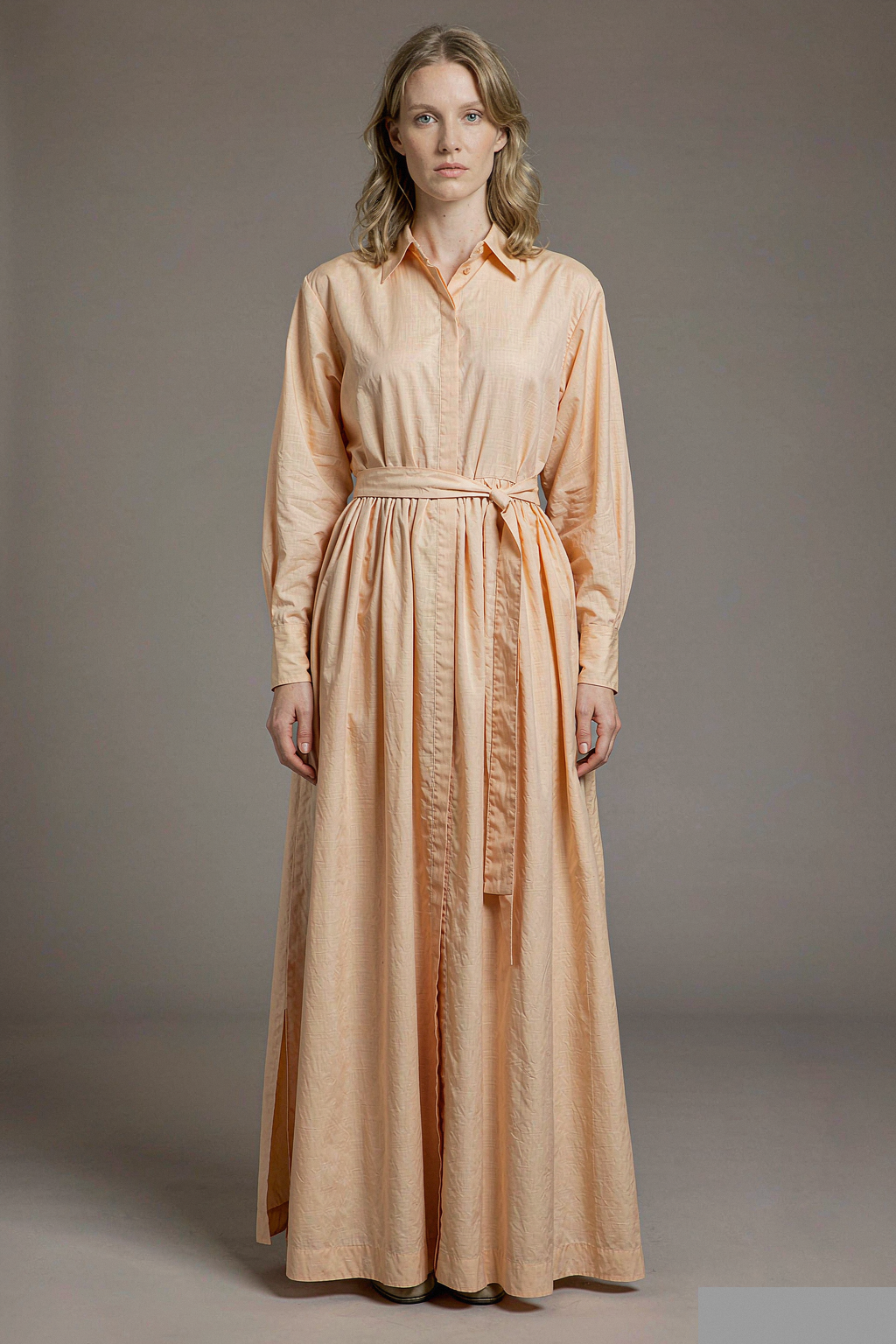
Our light-peach crinkle maxi shirt-dress development reference combines a collar, a gathered waist, a tie belt and a full skirt. Its proposed material is polyester crinkle crepe, with local interlining at areas requiring shape. The selection aims to balance texture, drape and support. The reference image does not establish its original composition. Buyers should review the fabric sample for surface character and coverage, then examine how the collar and placket behave in the actual sample.
Example: an evening gown and a tailored dress
The dusty-pink wrap evening-gown reference requires attention to the relationship between a sheer outer appearance and lining coverage. Stretch, seams and closures must work together. By contrast, the navy double-breasted blazer-dress reference needs material support at the lapel and front opening. These two garments should not automatically receive the same low-cost fabric. An affordable plan must still preserve the intended construction; reducing necessary lining or support can change the garment rather than simply reduce its price.
Connect the material plan to the estimate
A useful material proposal records the fabric structure, target composition, target weight, usable width and any lining or interlining. Costing should use those same definitions. Fabric consumption also depends on size mix, garment length, skirt fullness, grain direction and cutting losses. If the proposed cloth changes, the consumption and sewing assumptions may need recalculation. A similar price per metre does not guarantee a similar garment cost. Published development estimates apply to their stated assumptions and are not unconditional quotations for any fabric or order.
Confirm before committing to production
Review the actual material sample, colour, garment sample and agreed specifications before a firm bulk commitment. Stretch recovery, shrinkage and other performance claims require suitable evidence; a photograph or a composition percentage is not a test result. If an affordable alternative changes sheen, texture or silhouette, the difference should be discussed openly. Buyers with a locked material specification should send it at the start. Our proposed selection can support development discussions, but it should not silently replace a buyer’s agreed specification.
Questions to include with your reference
Can the same appearance be developed using a different fabric? Sometimes, but construction and appearance must be reviewed together. Does a similar-looking material have identical properties? No; the sample and relevant evidence are needed. What should a buyer send first? Include clear front and back references where available, quantity per colour, target size range, desired coverage and any budget constraints. If the reference includes accessories or several garments, identify exactly what is being quoted. This prevents an estimate for a single dress from being mistaken for a complete styled outfit.
A comparison record buyers can request
Use three separate lines in the development brief: MD-001, texture and gathered skirt, proposed crinkle shell and local support; MD-002, sheer appearance and coverage, proposed outer fabric and lining; MD-004, tailored lapel and front structure, proposed suiting and support. For each line, record the buyer’s non-negotiable appearance, the factory proposal, any accepted visual difference and the sample check that remains. Do not approve all three using a single phrase such as same fabric as photo. If the buyer prefers a different material, revise that line and its costing basis rather than changing the entire collection without a record. This concrete comparison separates an appearance reference from a manufacturing specification.
Discuss your development with our factory
For a practical enquiry, send the style reference or technical pack, quantity per style and colour, intended size range, preferred material requirements and target delivery date. Identify any details that are fixed and those open to a proposed alternative. Reference the relevant product number when discussing an existing website style. Our team can review the requirements and quotation scope with you; the final material, sample and order conditions need agreement before a firm commitment.
 Partners WantedJoin Us As Business Partner!





ISO9001 & BSCI COMPLIANT & CUSTOM ORDERS WELCOME OEM/ODM


http://www.zgyese.cn